
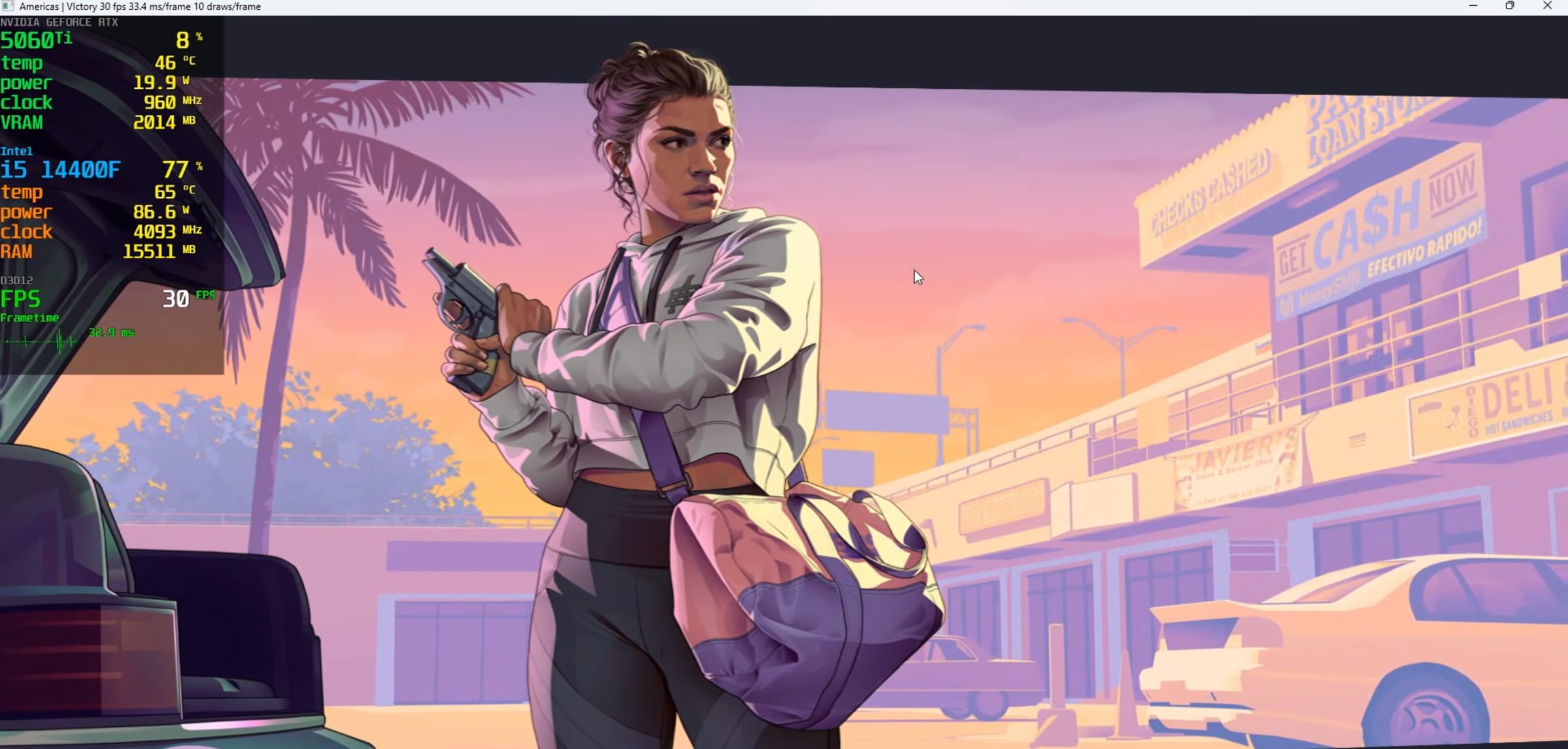

Watching amateur coders try to force the year’s biggest game onto PC has become a spectator sport. Search “GTA 6 PC” on YouTube and you’ll find progress videos and live trackers, such as PortWatch VI, that rank the unofficial projects by how far each one has gotten.
Most of those builds are barely playable. Developers report between one and four frames per second on cards like the RTX 3050, 4070 and 5060 Ti, and Kotaku describes the best of them as running at “sub-5 frames per second.” Even so, some builds now show 3D models, shadows and physics. Not everyone is cheering. On November 24, Take-Two filed a DMCA notice with GitHub against Project Leonida, the largest of these efforts, and the takedown covered 3,007 repositories. Take-Two argues the project exceeds the license Rockstar grants to players, and the project’s Discord server was removed.
Why is it so fascinating? Compare it with GTA 5. That game launched on consoles in 2013 and didn’t reach PC until April 2015, and the early fan efforts took months to show anything. GTA 6 came out on November 19 on PS5 and Xbox Series X|S, and Rockstar has not announced a PC version. Within days, builds based on a leaked Xbox version were already booting.
The difference is the tools. Some developers are using AI coding assistants, including Claude and Google’s Antigravity, to cut down reverse-engineering work, and some stream the sessions live. The code still needs a lot of manual stability work, and Anthropic has reportedly tightened Claude to make cloning games harder.
So when will it be playable? Nobody knows. Several rival projects are still active, and TweakTown speculates a build could appear before Christmas, though that is a guess. For now, the wins are small: getting the frame rate up and fixing rendering glitches. Former Rockstar North technical director Obbe Vermeij has suggested the pressure could push Rockstar to release a PC version sooner.
Sources: